Field note
How Much Does Spray Foam Insulation Cost?

Spray foam insulation cost is one of the first questions asked when considering the best way to protect a building thermally. The advantages of spray foam insulation over other insulation types are well-known; its the cost of spray foam that is usually the biggest question.
Even though spray foam typically will cost more relative to alternatives, the energy efficiency and the energy savings over the life of the building are substantial.
Cost of Spray Foam Insulation
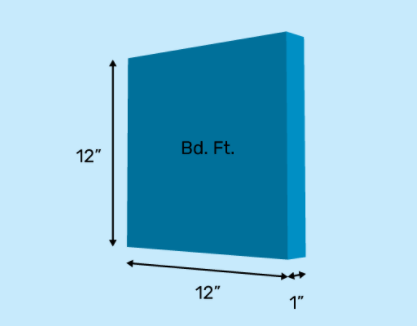
Spray foam insulation costs are figured in board feet since the thickness will vary depending on the specific building application and architect specifications. Board feet in the insulation world are determined by simply taking the total square footage and multiplying it by the thickness in inches.
For example, 10 square feet of spray foam insulation with a 1″ thickness is considered 10 board feet. If that same 10 square feet of spray foam insulation were applied with a 3″ thickness, it would be 10 square feet x 3″ equaling 30 board feet of total spray foam insulation.
It isn’t easy to apply a spray foam insulation average cost to any project in any location. One of the reasons is that spray foam is installed by trained crews. The labor costs involved in spray foam insulation will vary from region to region, and the specific conditions of each project will determine how long it will take.
While the spray foam material cost is fairly consistent from one town to the next, the cost of labor varies greatly. This is the main reason you will want to use caution when applying “unit pricing” to your project budget.
Things to Consider When Pricing Spray Foam
It’s also important to consider that certain project conditions will incur additional costs to installing spray foam. These project-specific conditions are taken into account when the pricing is compiled. When projects go over budget, many times it’s because of the job site-specific conditions that were not taken into account, which send the project costs soaring beyond what was originally planned.
Rather than using inaccurate square foot pricing for spray foam insulation that might vary greatly from what your project will actually require, it’s a good idea to talk with a local spray foam contractor. Find one of the best spray foam insulation contractors in your specific market, and call or email them with details about your project.
The best spray foam contractors will have project estimators on staff to assist potential customers on budgetary price ranges. Although the numbers they give over the phone might not be set in stone, they will be much closer and realistic to your specific project.
Open Cell Spray Foam Insulation
There are a few different types of spray foam insulation materials to consider. Light-density, open-cell spray foam insulation is most common above grade in wall cavities, attics, and underside of roof decks. Open-cell foam has moisture permeability properties to encourage bi-directional drying of wall assemblies.
Open-cell spray foam insulation is also much more cost-effective than closed-cell. While it has lower R-values than closed-cell, it’s much more affordable. Open-cell insulation is also easier to work with because it doesn’t dry to such a hardened state as closed-cell foam.
Closed Cell Spray Foam Insulation
Medium-density, closed-cell spray foam insulation typically has a higher overall cost than open-cell. This type of insulation can be applied at temperatures as low as 5 degrees F. The properties of closed-cell insulation give it higher strength and greater impact resistance.
It’s typically found in below-grade applications, basements, or tough-to-reach areas, such as a crawl space. Closed-cell spray foam also has a higher R-value than open-cell spray foam and other types of insulation like cellulose and fiberglass.
Closed-cell foam insulation has the capacity to reject water. This type of spray foam is much harder when it dries and is more durable if it’s left exposed after construction is complete.
Benefits of Spray Foam Insulation
Numerous benefits make spray foam insulation the preferred material for nearly any construction project. Many new homes use spray foam insulation within the wall stud cavities, at the rim joist, attic floor, and roof trusses for greater thermal protection over fiberglass.
The higher costs for spray foam over fiberglass batt insulation are offset by lower future heating and cooling energy bills over the life of the building. You might be wondering why the energy star savings are so great with spray foam and what makes it so much more desirable over fiberglass insulation.
One of the primary benefits of spray foam is the gradual expansion of the insulation after it’s sprayed and applied to a certain area. The expansion fills small cracks, holes, and gaps. This prevents heat loss in the winter and keeps cool air in during the summer.
One benefit to spray foam insulation that is often overlooked is that spray foam acts as a vapor barrier and its thermal properties. This eliminates the need for an interior air seal vapor barrier typically applied to the inside of wall studs and trusses behind drywall.
The expanding spray foam prevents air leaks and removes any worry of a poly vapor barrier tearing or installing incorrectly.
How to Install Spray Foam Insulation
Installing spray foam insulation is fairly simple at exterior walls and stud cavities off the ground in a new construction project. Installers spray the desired thickness to the backside of the exterior sheathing, accounting for the expansion of the material. Hence, it fits snugly, leaving no gaps or cracks to the exterior.
Spy polyurethane foam insulation can be more difficult at roof structures, hard-to-reach crawl spaces, roof parapets, and especially high walls. Renovation projects typically will have a higher cost on average to compensate for unknown conditions.
Spray foam in an existing building might also result in higher costs than new construction because special care might be needed around finished areas of the building.
Superior R-Value
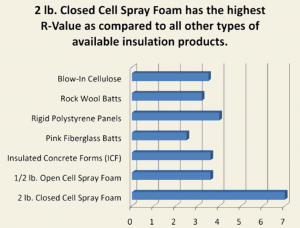
The R-Value of spray foam insulation is far superior to its fiberglass batt competition. In fact, the average R-value for fiberglass and cellulose insulation is somewhere around 3 to 4 per inch of thickness. The average R-value for closed-cell insulation is nearly double that, somewhere in the neighborhood of 6 to 7 per inch of thickness.
Spray Foam Insulation Cost Calculators
There are some pretty amazing spray foam insulation cost calculators out there. So many, in fact, you could spend an entire weekend surfing between cost calculators for your spray foam project, and you still wouldn’t see them all.
Cost calculators are neat, but it’s important to understand the inputs, as software is only as good as what the operator tells it to do. Some spray foam cost calculators even include estimated savings in energy costs compared to other products.
Here are a few links to helpful spray foam cost calculators, along with a board feet calculator from Calculators.io.
- Energy Efficient Solutions
- A Warehouse Full
- Absolute Spray Foam
- Home Advisor
- Homewyse
- Calculators.io, Board Feet Calculator