Field note
Structural Steel Studs and Wood Studs

Structural steel studs have invaluable uses in commercial and residential construction projects. However, between the variety of thicknesses, flange sizes, and types of steel, it can be hard to tell which type of steel studs should be used for which purpose. And are steel studs better than wood studs?
Let’s clear up some of the confusion around the general term “steel” and nail down what exactly structural steel studs can do. Then you can best decide between steel studs vs. wood studs.
What is a Steel Stud?
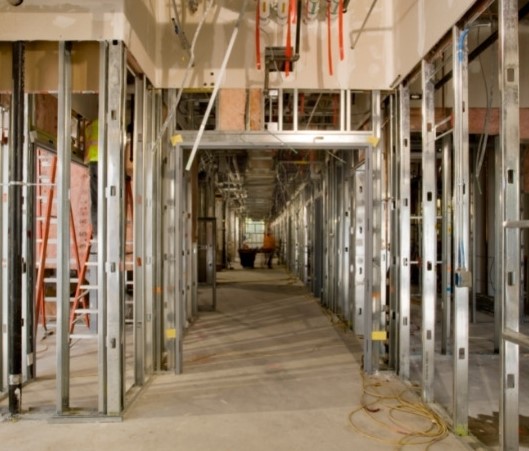
Much like a traditional stud or wooden stud, structural studs are the metal counterpart to the wooden beams that create the framework of construction. Some people may refer to tracks as steel studs as well. Tracks have a slightly different shape to studs but act as the horizontal version. Tracks function as the tops and bottoms for steel studs.
Two Types of Strucural Steel
“Steel” is a flexible term colloquially used to describe all sorts of metal. But in commercial construction, two types of steel are used: cold-formed steel and structural steel.
When people talk about structural metal studs and steel stud framing, they often refer to cold-formed steel. I know; it’s a bit confusing. But the two types of steel are manufactured differently and thus have vastly different uses.
Structural Steel
Structural steel refers to steel beams that are hot-rolled, meaning they are cast while the steel is molten hot.
These structural materials are thicker, heavier, and stronger than cold-formed steel (or CFS) and are used almost exclusively in large-scale load-bearing applications.
Structural steel may be used to frame bridges and the base floors of industrial sites.
Cold-Formed Steel
Cold-formed steel refers to the structural steel studs that come to mind when most people think of steel studs.
Like traditional wood studs, these thin steel products frame floors, walls, and ceilings. Cold-formed steel, unlike structural steel, is produced at room temperatures by guiding metal through rollers and stamping them into shape.
CFS products are also called structural steel studs and light-gauge steel studs. Standard thicknesses range from 12 gauge to 25 gauge material and are typically pressed into either C or Z-shaped studs or tracks.
Numerous top brands such as Marino, Clark Dietrich, and Cemco produce nearly identical products with almost identical technical specifications.
Clearing Up Any Confusion on Steel Studs
Getting the two types of steel confused happens pretty often. Not only are both steel components used in structural applications, but they’re also frequently used on the same project. The easiest way to differentiate them is by size and use.
Structural steel is hot-rolled and only used in large, load-bearing applications, like framing out the base floor of an apartment complex.
CFS is produced cold and comprises most uses for steel stud drywall framing of interior walls and ceilings, exterior in-fill framing, some load bearing applications, or a CFMF floor joist system.
Using Structural Steel Studs
Differentiating between structural framing and cold-formed steel framing only opens up the vast array of uses for structural metal studs on commercial sites.
If you have any experience browsing these studs, then you know there’s a cornucopia of CFS studs out there in a variety of sizes from thickness to flange size to steel strength and gauge.
The combination of these identifiers will determine where those studs will be used. Some CFS studs will be used for axial load bearing walls, while others will be used for floor joist assemblies.
The easiest way to tell which size steel stud works best for an application is by flange size. As flange sizes change, thicknesses and vertical strengths change as well. CFS studs can be broken down into five flange sizes.
1 ⅜”
The 1 ⅜” flange size comes with a ⅜” return (the lip on the C-shape of the stud). These lightweight structural members support exterior walls, specifically the cladding material on those walls, and provide required wind loads. Examples of studs at this size are EQ studs used for drywalling.
1 ⅝”
Many consider the 1 5/8″ steel stud to be the industry standard, meaning these are the most widely applicable size of CFMF Systems. These studs come with a ½” return and are more commonly used in non-structural metal framing like curtain walls. However, these studs have sufficient vertical strength for structural metal-framing applications like floor joist assemblies.
2”
The 2” flange studs with a ⅝” return have a wider surface, making them best suited for sheathing materials. These studs are also often used in axial load-bearing walls.
2 ½”
These studs come with a ⅝” return and have an officially wide flange. Studs of this size are best for floor joist assemblies of heavy load-bearing applications.
3”
3” flanged studs are officially heavy duty and are used in the heaviest load-bearing instances. These are probably the least commonly used of the studs but are nonetheless an invaluable tool for structural metal-framing.
Identifying Steel Studs
Spotting the difference between sizes and thickness of steel stud by eye can be difficult. Thankfully, manufacturers like Clark Dietrich are required to have printed codes on each stud that label the product by width, flange width, thickness, and steel strength.
On top of the printed labels, steel studs and tracks should have a specific color on their ends to differentiate the thickness of the beam. There are many colors, from blue at thickest to black at the thinnest.
Adhering to Guidelines
This can be said of any construction project from at-home DIY to large-scale commercial: adhering to guidelines is of the utmost importance. When remodeling a private home, there is likely some leeway on what size wood studs you can use and whether they need to have a specific sound-proofing quality.
However, on commercial projects with cold-formed steel products, adhering to building codes is a strict must.
The above guide to studs by flange size helps to differentiate which types of structural stud should be used, but the final word should always be your local building code. While 1 ⅝” studs are the industry standard, make sure to check with your local municipality.
Different areas are subject to varying levels of seismic activity and wind loads. Depending on design wind pressures, these places may require different minimum flange widths for support or varying materials.
The Steel Stud Manufacturer’s Association (or SSMA) has technical guides for their metal studs that provide all the information necessary to ensure your commercial site remains up to code.
Why Choose Steel Over Wood
While commercial codes may require them, steel studs have many advantages in a variety of applications. Overall, steel is a more sustainable building material than wood and is often cheaper.
Steel provides enough flexibility and strength to withstand a multitude of conditions. Steel studs are stackable, which saves space, and come pre-drilled with holes for plumbing and electrical installations.
EQ studs prevent fewer drywall nail pops since drywall is fastened to steel with screws.
Overall, structural steel studs have a wide variety of uses and many advantages, from less waste to stronger supports.
Whether working with interior wall studs or exterior walls, the most important thing to remember is to check with local building codes and make sure you’re using the correct type of CFS for the proper purpose.
What is a Demising Wall? READ more here –
Steel studs Vs. wood studs: Which is the Better Choice?
Wall studs, the vertical pieces of wood or metal that function as framing elements in buildings by supporting exterior walls, interior walls, basement walls, floors, and the roof, are fundamental components of construction.
They ultimately hold everything in place, windows, doors, interior finish, exterior siding, insulation, and utilities, helping give shape to a building.
An element as important as a wall stud certainly deserves consideration. Let’s look at the difference between steel studs Vs. wood studs, why one is used instead of the other in construction, and the benefits and drawbacks of each.
Steel Studs Vs Wood Studs, The Basics
Whether using traditional wood studs or steel studs, they are placed perpendicular to the interior wall to provide strength while creating the space needed for pipes, wires, and insulation.
Wall studs are positioned between two horizontal members called top and bottom plates, or top and bottom track. Studs are nailed or screwed to the top and bottom ends of the studs to create the wall frame. Typically placed 16” to 24” apart, studs make load-bearing walls of the structure and support the roof.
There are two main types of studs for all practical purposes: wood studs and steel studs. Until recently, if you were shopping for steel studs at a home improvement center for residential buildings, they weren’t that easy to find.
Builders and home remodeling professionals purchased them from specialty building supply outlets. However, more recently, you’re more likely to find steel studs, although wood studs remain more popular.
The primary considerations when framing interior walls are strength, durability, overall quality, and ease of use. Most houses and small apartment buildings are built with wooden studs, whereas most commercial structures and buildings use steel studs. The question is, why?
Benefits of Wood Studs
Traditional wood studs can be less expensive than steel studs. They are available at most building supply stores and big-box retailers, in two dimensions: 2” x 4” and 2” x 6,” with lengths ranging between 8” and 16.’ They are usually made of spruce or Douglas fir.
There are many important factors and advantages to using wood studs for your construction project:
- Strength: Depending on the type of stud, wood studs are stronger than their metal counterparts and can support more weight.
- Size: They are available in more sizes than metal studs.
- Renewable Resource: Wood is easier on the environment than steel.
- Can be more Affordable: Depending on current lumber prices of course, wood studs can be more affordable than steel studs. On a square foot basis, wood studs can possibly cost 30% less. But in volatile commodity markets such as the last few years, doing a careful and up to date cost analysis is always recommended.
- Learning Curve: Believe it or not, there’s a slightly more difficult learning curve involved with steel stud framing. Wood stud install is simple.
- Easier to Hang Drywall: Some would argue drywall is easier to hang on wood rather than on steel studs. Drywall screws or nails are easier to install into wood studs making drywall hanging slightly faster.
When deciding between wood studs and steel studs, you will need to factor in the climate in which the construction project is located because humidity and moisture can cause the studs to rot.
Benefits of Steel Studs
The steel studs you find in home improvement centers are available in standard sizes of 2 ½” to 14.” Made from 25-gauge steel; they are durable, fire-resistant, and not vulnerable to rotting or termite infestation.
Because they must be installed with screws instead of nails, they have a more stable connection, making them better to withstand tornadoes and earthquakes. And if you make a mistake in spacing, all you have to do is unscrew them. Finally, the scrap is recyclable.
Here are a few more benefits of steel studs:
- Quality: Steel studs have uniform quality and will not warp or bow.
- Durability: They are fire, termite, water, rot, and split proof.
- Lightweight: They are a lighter material than wood, making steel stud framing easier.
- Long Lasting: While they can cost up to 30% more than wood studs, in the long run, they are less costly than wood studs because they last longer.
- Easy to Fasten: They are fastened on the top and bottom into special tracks that hold them in place.
How to Decide Whether Wood or Steel Studs Are the Right Choice for your Project
Still can’t decide between wood and metal studs for wall assembly? Here is a list of the drawbacks of each type of building material that may clarify which building material is appropriate for you.
Wood Stud Cons
Among the biggest complaints about using wood studs and wood framing is the waste factor: the studs must be sorted when you receive them, and you will have to discard any individual pieces that are knotted, warped, or cracked. The waste factor can be as high as 20%.
Here are some other factors that make wood studs less desirable than steel studs:
- Susceptible to termites and mold
- Susceptible to rotting, warping, splitting, and cracking.
- Susceptible to water damage
- Requires lots of tools for installation
- Volatile wood prices can fluctuate greatly
Steel Stud Cons
Steel studs certainly have their fans due to their light weight, convenience, and durability. However, one of the biggest downsides of steel studs and metal framing is that a homeowner can’t hammer a nail into it to hang a picture.
In addition, many contractors advise against mounting anything heavy, such as a medicine cabinet, to it because it cannot sustain the weight. However, this problem can be solved by adding wood blocking in strategic areas.
There are additional drawbacks that may sway you in the other direction:
- Difficult to cut, requiring a chop, miter, or circular saw
- Difficult to screw when using drywall
- Becuase the thermal bridging properties of steel suds, they conduct heat extremely well and may require a stronger thermal barrier.
- Allows heat loss
- Less strong than wood studs
- Subject to condensation and rusting
- Creates safety hazards during installation
- Metal frame of a building can become energized with deadly electricity if bare wires are exposed
- Interference with wireless signals
- Because wood studs are made of organic material, steel studs have a much longer lifespan
In conclusion, if you are a do-it-yourselfer and particularly a first-timer, you might get frustrated trying to work with metal studs. Even if you decide to go with steel, you can always use wood for trim, window, and door framing to make the job easier.
Ultimately, which one you choose boils down to your personal preference since both building materials have a long list of pros and cons.
READ more about other popular drywall products –
What You Need To Know About Ballistic Drywall
Sheetrock Vs Drywall: The Guide To Gypsum Panels
Green Board: The Basics Of Water-Resistant Drywall
Basics Of Sheetrock Screws And Drywall Screws
DensShield Tile Backer For Your Next Project