Field note
What is Hat Channel?

Hat channel and furring channel is a hat-shaped framing member for use when furring masonry walls and ceilings. It provides a non-combustible solution for leveling out uneven surfaces and comes in a variety of depths and gauges.
Hat Channel, Where, When, and How Can I Use It?
To avoid having to go backward on your project, we’ve got the ultimate hat channel guide for you. Plus, we’ll answer all of your burning questions for your residential or commercial framing project.
What is a Hat Channel?
Hat channel, or hat-shaped channel, is perfect for leveling walls and uneven surfaces. You commonly see it used in concrete wall applications, masonry walls, and basements.
The name hat channel comes from the shape of the channel. The profile resembles the shape of a top hat. Hat channels are unique because of their hat-shaped design. The design of the hat channel also helps give it strength.
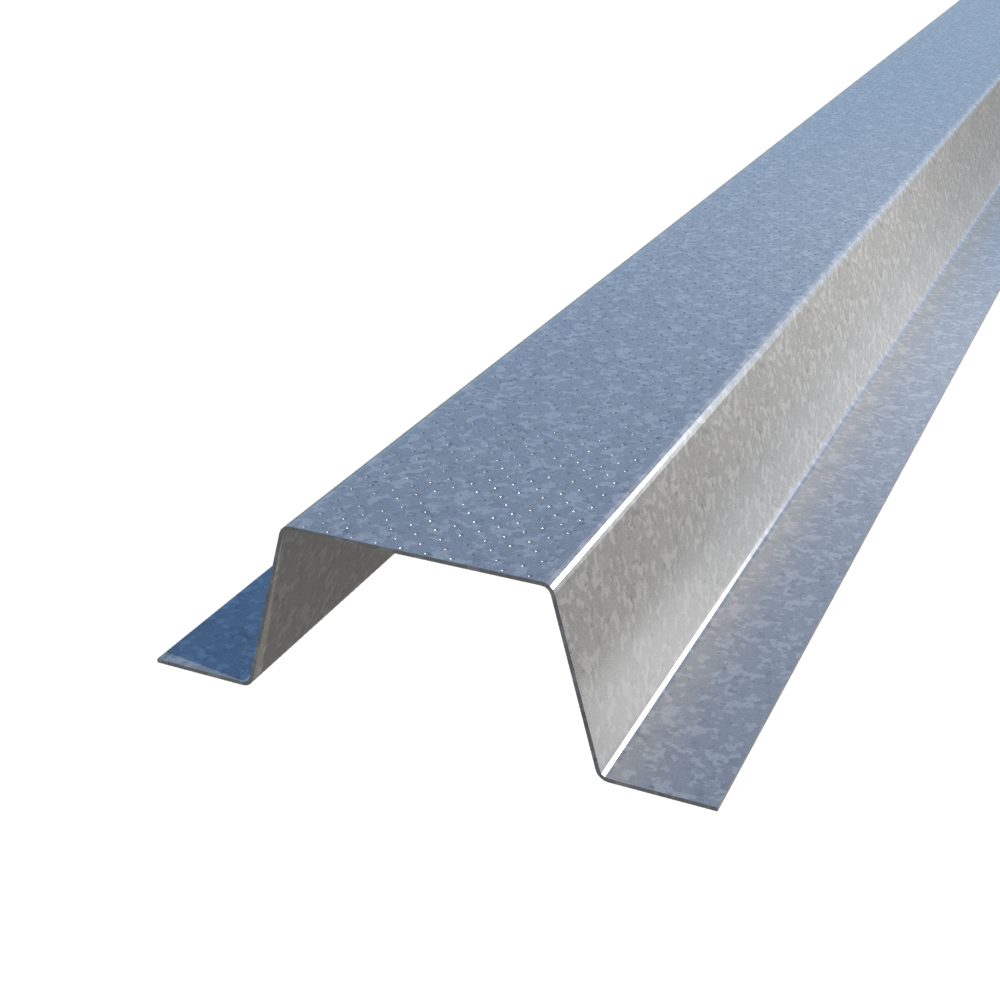
These channels also have great ease of installation and are suitable for use with ceiling and wall projects.
Metal hat channels are the most popular, as many of them are anti-corrosive and anti-flammable. Their sturdiness makes them desirable materials by contractors, especially for basement renovation projects.
Where Can I Use Hat Channels?
Hat channels are used in a variety of ways in both commercial and residential construction. Whether it’s at the underside of the building structure, basement renovations, or furring concrete interior walls, hat channels are incredibly versatile.
Depending on the layers of drywall added to the hat channel, you can get additional acoustical performance and a high STC rating from an existing wall by adding hat channel.
How To Install Hat Channel
Installing hat channels involves the use of concrete screws or fasteners. The placement of those screws is just a few inches away from each other.
The first two screws are on either side of the channel. The screws connect directly to any wall studs, enabling the channel to be sturdy and firm.
Hat channels are typically used at hardened concrete or mason walls. The installation of hat channels is an essential step in furring or leveling the wall.
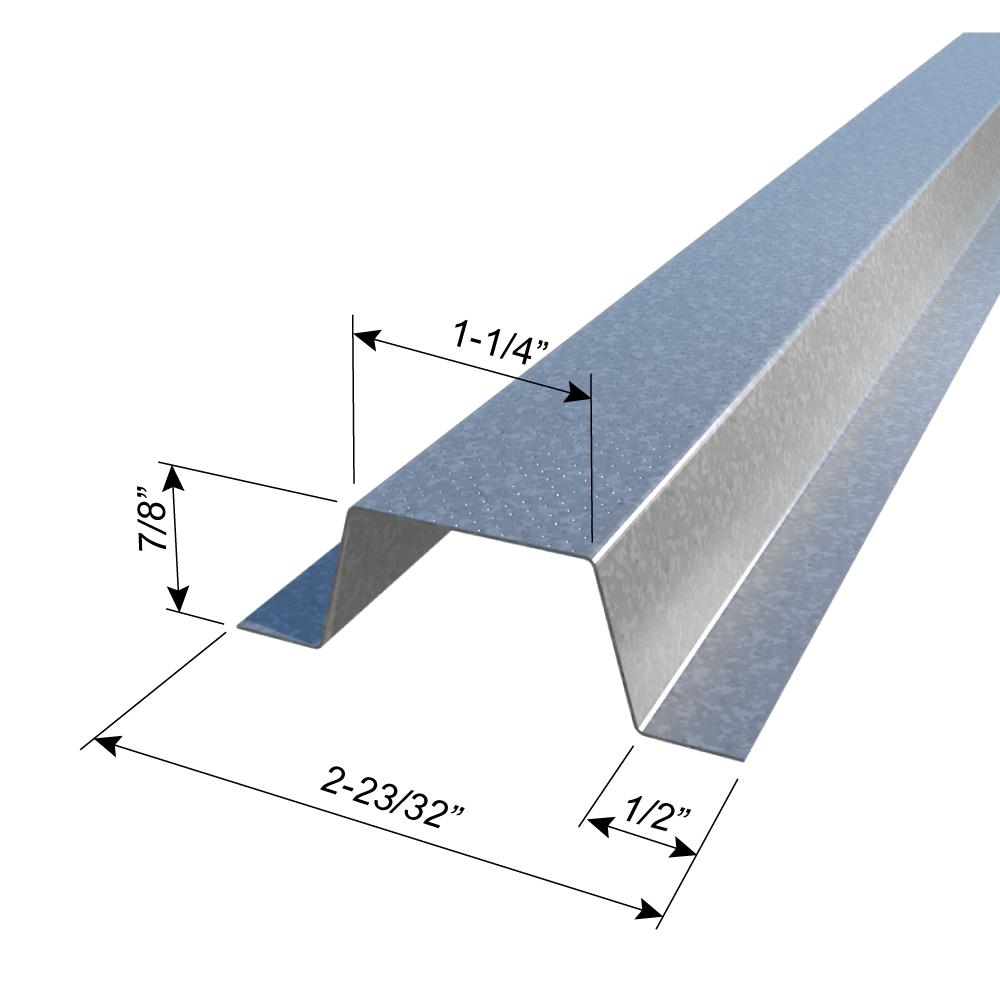
What is Furring?
Furring is the process of creating thin walls over a concrete structure or creating a thin wall with only one side exposed. These framing members include hat channels, Z-furring channels, and furring strips.
Furring strips are thin strips of wood or metal for filling or applying over a substrate to create level masonry walls. You can also use them on ceilings to ensure that it is even across the entire surface.
Furring involves the outer wall, studs, and a drywall furring channel. The drywall is the outer edge of your wall, with the interior acting as a drywall furring channel.
This process ensures multiple layers of insulation between you and the ground. Part of what makes your basement wall system so efficient is the use of heavier gauge furring.
Furring a Ceiling with Dropped Ceiling Applications
When furring a ceiling, it is vital to be aware of the position of your ceiling joists. Unlike studs, your beams act as the endpoint of your furring channel, making it a completely different process compared to furring a wall.
Furring a ceiling is a great way to complete the soundproofing of your bottom-most floors. Much of this comes from knowing about the Sound Transmission Class rating.
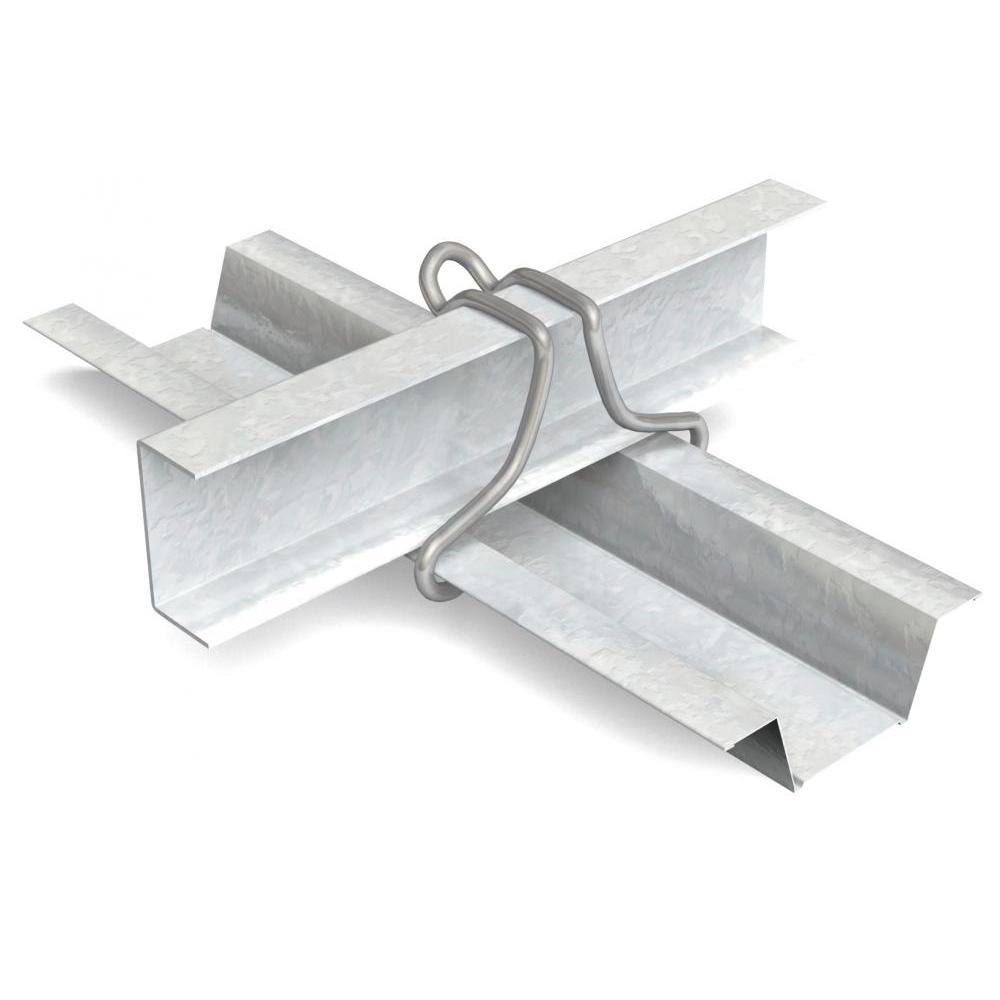
First, it is essential to note that resilient clips or springs are necessary for ceiling furring to work. The spring action isolates boards away from the joists and prevents sound shocks. The use of liberal springs is one way to distribute weight across the ceiling assemblies’ surface area.

The springs are at different degrees of stiffness, ensuring that your ceiling is “free.” This process provides sound isolating capabilities of your channels that can be effective. If your hat channels are screwed onto multiple joists, the sound canceling capabilities are nullified.
Vibrations travel directly through physical objects in this way. By having “loose” hat channels with openings, the sound is absorbed into the insulation and the channels before it reaches the drywall-covered ceiling.
With this in mind, you might supplement your ceiling with sound clips. These clips, sometimes called whisper clips, are often incredibly effective for controlling sound levels for your ceiling projects.
Another method to secure hat channel to the underside of a building structure is to use tie wire. In this application, furring channel will be installed perpendicular to the ceiling joist and 18-gauge galvanized tie wire will secure the channel to the joist at each intersection.
Will You Ever Need To Add Furring Strips To A Floor?
Basement floors typically have nothing underneath them. With this in mind, the thick concrete slab flooring acts as a foundation that absorbs most sounds coming through it.
Because the basement ceiling already contains your soundproofing efforts, even the top floor won’t need anything special. Even with floating floors, which bounce sound around a lot, the soundproofing elements are typically kept to walls and ceilings.
When looking for good furring material, you should keep your eyes open for STC ratings.
How STC Ratings and Hat Channels Work Together
Sound Transmission Class, or STC, refers to a wall’s ability to reduce decibels. Because a hat channel can excel at reducing sound, these channel types typically have solid STC ratings.
Proper installation and use of the space and suitable materials improve to give your wall a higher STC rating. Seek out materials that have 60 or higher ratings for use on commercial sites where soundproofing is a must.
Hat Channel and Sound
Alongside hat channels, here are additional home framing methods you can use to reduce sound transference:
- Resilient channels
- Sound isolation clips
- Double-stud framing
To increase your STC rating using hat channels, growing your mass and sound absorption abilities is essential.
Mass referees to the overall surface area of your sound-absorbing material. The larger your wall is, the more your sound has to travel through.
Sound absorption comes as a feature of most standard insulation. Fiberglass batts and blow-in cellulose insulation are both excellent methods for naturally reducing sound.
Ideally, hat transmission and the proper use of cement screws should create a natural “secondary wall” preventing sound from traveling through. This is why it’s vital for hat channels not to connect to multiple ceiling joists.
Different Hat Channel Sizes
These hat channels differ by two different size ranges:
- Gauge
- Length
A channel’s gauge refers to the depth at which the hat channel goes. The larger your hat channel gauge is, the deeper it goes.
From our earlier discussion, you should realize that heavier gauge furring (larger numbers) add to the mass of your hat channel. As a result, the best soundproofing you can get is from a 25-gauge hat channel.
However, most residential needs will be alright with less depth.
Here are the standard sizes:
- 25
- 20
- 18
- 16
- 14
Most standard lengths are around 8 and 12 feet long. More extended hat channels are available in custom lengths where you have abnormally tall buildings and basements.
You can cut down the additional material and place them into smaller spaces as well. Recall that the standard wall height for residential applications is 8′, so base your decision on the proper spacing you need.
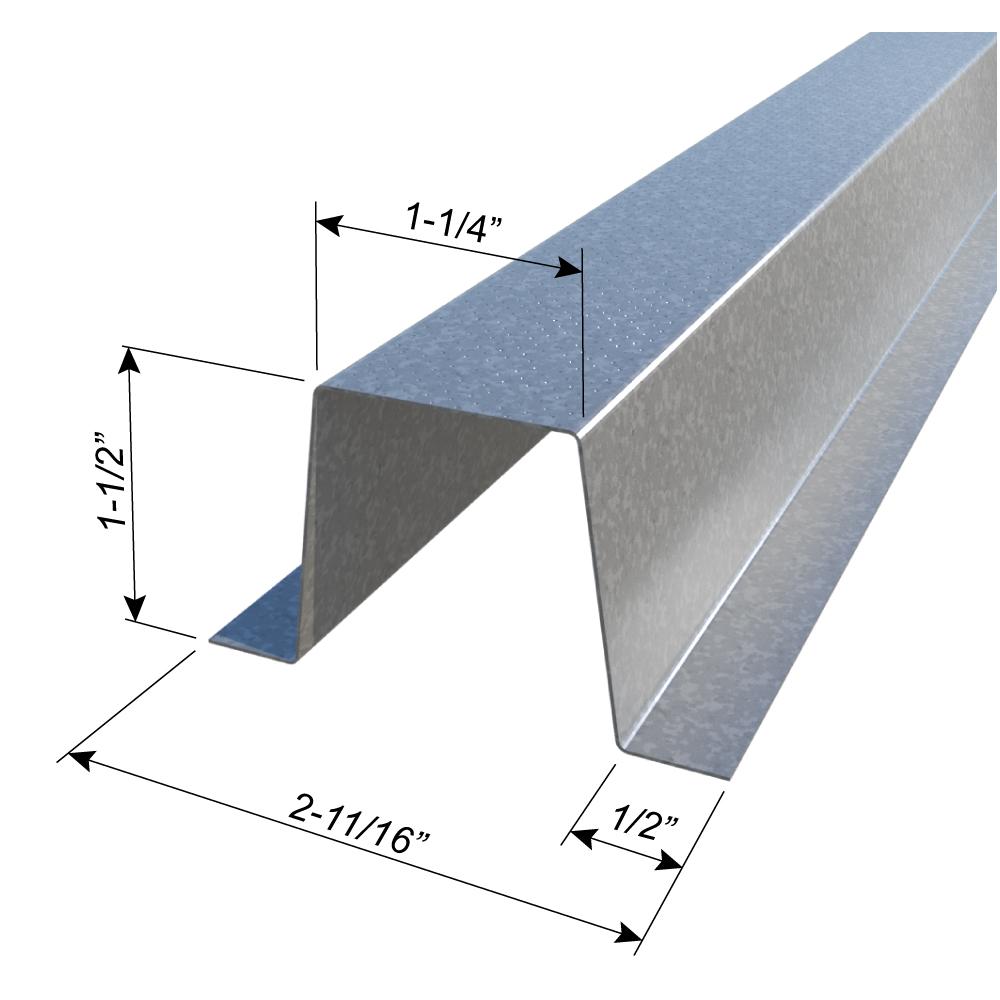
Different Materials of Hat Channels
A metal furring channel is sturdier and longer-lasting compared to alternatives. To ensure your project lasts longer, stick with metal channels.
You can expect them to come in two forms:
Steel Hat Channels
Steel channels are better for high-load capacities. These are most often used in basements with heavy-duty needs because of the durability of galvanized steel.
Steel channels and steel framing are a combination you want to use for incredibly sturdy walls. When people talk about having “good bones,” this is what they are likely referring to.
The steel construction is also a naturally corrosion-resistant framing piece and fights against flames. Galvanized steel is more expensive, so it is not as suitable when building for custom projects.
Aluminum Hat Channels
Aluminum channels are easy to mold and cut, given that they are lightweight items. As you might expect, aluminum is better for light-duty needs.
However, you have an unusual basement with unique needs; aluminum will save you money while retaining solid fireproofing and water resistance.
How Hat Channels Compare To Other Channel Types
Hat Channels are just one of the many available rolled products on the market. You’ll find that providers will cover a wide range of potential channels.
When looking for the top brands of these channels, here is how they compare to other forms:
Resilient Channel (RC Channels)
A resilient channel appears as though it is a hat channel but cut down the middle. Hat channels, which are “fedora-like,” while RC channels are closer to a baseball cap.
RC channels are also effective at reducing sound levels. Much like your hat variant, it can also be incredibly effective for insulation.
However, RC channels are typically a bit less sturdy and practical. RCs are fastened to wall studs, but any contact can ruin RC channels’ soundproofing effects.
Hat channels are sturdy because of the lip on either end and the more robust materials used. Hat channels can prevent drywall from shifting. However, hat channels dual lips on either side make it less effective in soundproofing.
Z Furring Channels
These furring channels are for rigid insulation install. You see them used with gypsum panels, plaster, or masonry walls.
Unlike hat channels, Z channels are screwed in, with one side being up against the wall and the other concrete screw through the center. They can be just as easy to install when compared to hat channels.
Because of their use of one less screw, individual pieces can be a bit tricky to align. As a result, the hat shape of the hat channels is a bit more sturdy.
J Channels
J Channels can be used to protect the outer edges of windows and doors. These are placed in such a way where moisture cannot enter unwanted locations.
You typically won’t see J Channels and Hat Channels interact because J Channels are for exterior walls. Meanwhile, RC and Hat Channels generally are for basement usage and insulation.
In particularly thick outer walls, you might see Hat and J channels interacting.
U Channels
U Channels remove sharp edges around an object’s perimeter. You typically see them in use with metal products, for example, animal cages or screen doors.
Because of their use as channel trim, you won’t see them interact with hat channels. They are considered structural channels and are similar to C Channels in shape.
Top Brands of Hat Channel
According to the Industrial Quick Search Manufacturer Directory, here are the top brands among those who manufacture hat channels:
- Samson Roll Formed Products Company
- Johnson Bros. Roll forming Co.
- United Roll Forming, Inc.
- Roller Die & Forming Company, Inc.
- MP Metal Products, Inc.
- Premier Products of Racine, Inc.
Local building stores will have them on hand if you’re looking for hat channel for residential applications.
Wrap Up
There are considerable advantages when it comes to hat channels. They are sturdy, act as extra support, and work on almost any wall or ceilings. Also, if you are looking to reduce sound in your home, hat channels and resilient channels are an excellent solution.
For masonry walls and concrete builders, you’ll find their use among many construction projects that have soundproofing requirements. So the next time you’re trying to find a solution for protecting your walls from sound, consider using hat channels.